Get your copy
Out now in print & ebook
About the book
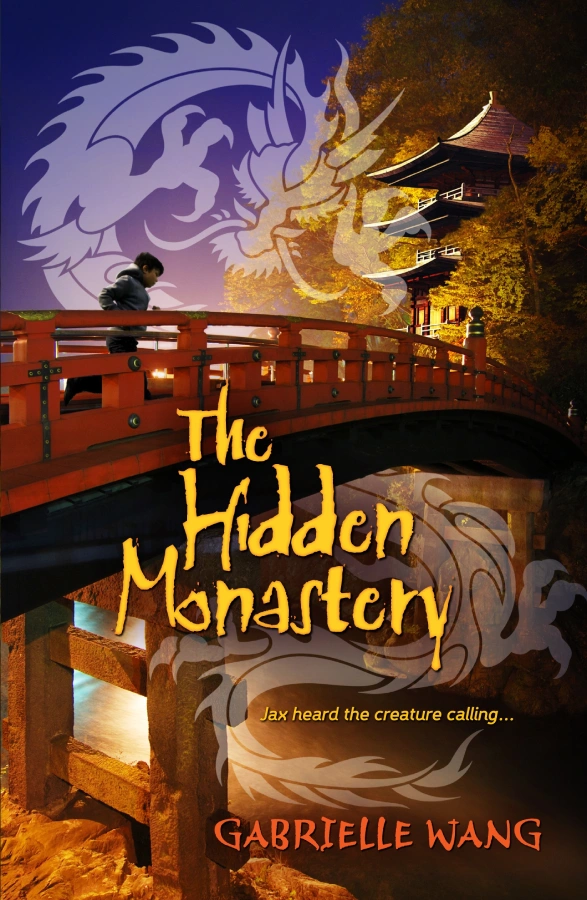
Like a whisper from the edge of the world he heard the creature calling…
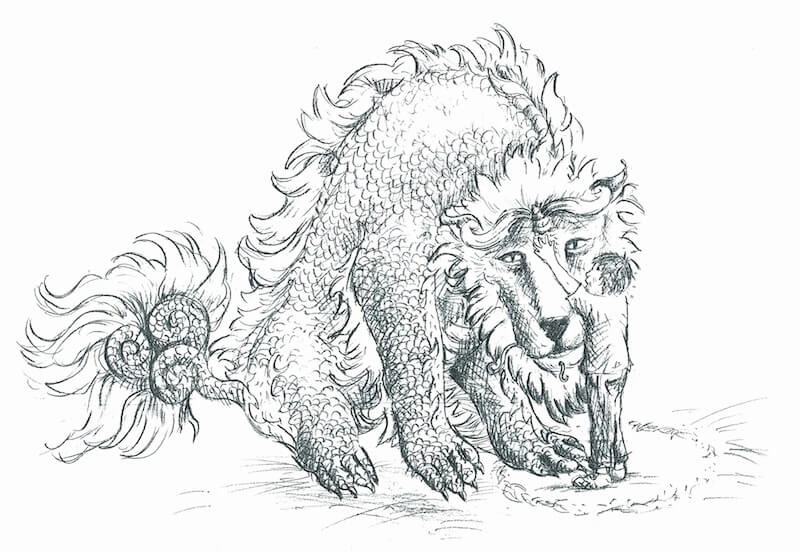
The Abbot said, ‘Peng is so powerful he can fill up the whole sky, and yet shrink so small he can sit on a blade of grass without it bending under his weight.’
‘No creature on earth can do that!’ said Jax.
‘But Peng is not from this world,’ the Abbot replied.
From the moment Peng fell from the stars as a tiny young creature, he and Jax have been connected. But it is not until twelve years later, when Jax stumbles across a mysterious monastery hidden deep in an ancient rainforest park, that he begins to discover his destiny, and what it means to be a Peng Master.
Published by Penguin Australia
CLICK TO SEE THE HIDDEN MONASTERY PINTEREST BOARD
Praise
Other links
Inspiration, Setting, Story telling
Background
Ideas for stories come in many forms and at anytime. The Garden of Empress Cassia came to me in a dream. The Pearl of Tiger Bay was inspired by a childhood memory. The Hidden Monastery appeared as an image in my mind. The vision was of a boy with a birthmark in the shape of a creature on the palm of his hand. As the boy blew on the mark, the creature came alive, stood up, and danced on his palm.
I travelled to the Daintree rainforest in Queensland to do my research and to China to visit monasteries there.
Here is one of my diary entries while travelling in China:
Dec 2005
As we climbed up the many steps to the top of Putuoshan, Buddhist chanting came out of loudspeakers disguised as rocks. Tourists were dressing in opera costumes to have their photos taken. On the eaves of buildings were qilins, creatures with wings on their hind legs and shoulders. One statue was an elephant lifting its trunk. There were also fantastic dragons with bristling tails that circled back to meet the head – almost as though the dragon was eating its own tail. Monks and nuns were everywhere. That night there was a full moon. I stood in front of the monstrous knocker on the monastery door and imagined what it would be like for a boy to approach the doors of a monastery in the middle of the night. So dark and spooky.
Standing in front of an ancient pagoda I gazed up at the moon. It wasn’t hard to imagine being another person admiring the same moon in exactly the same thing spot one thousand years ago. 1000 year old gingko trees, one on each side of the door. Massive. How can anything live that long? What have they seen? If they could talk what would they say?
When I was a child, I saw a movie on TV called 20,000 Leagues Under the Sea, a story by Jules Verne. Ever since then I’ve been fascinated by deep sea creatures. It was only a matter of time before I would write about one.
While doing research for The Hidden Monastery on the internet, I came across an article about Bloop, the nickname given to a mysterious recording that was picked up by US navy spy equipment in 1997, and again in 2002. This equipment was a relic from the Cold War between USA and Russia, but when Russia was no longer deemed a threat, the equipment was given over to science. The Bloop, the scientists say, was more powerful than any calls made by any known creature on earth. This background information was perfect for my creature, Peng.
Around 256BC in China, there lived a philosopher called Zhuangzi. His philosophy comes in the form of stories, and one of these tales tells of a creature that starts life as a giant fish, then changes into a huge bird called Peng. This creature is so powerful he can stir up the water for three thousand miles around. And is so big his wings cover the sky like clouds. Zhuangzi’s creature greatly inspired the Peng of my story .
Ideas for stories come in many forms and at anytime. The Garden of Empress Cassia came to me in a dream. The Pearl of Tiger Bay was inspired by a childhood memory. The Hidden Monastery appeared as an image in my mind. The vision was of a boy with a birthmark in the shape of a creature on the palm of his hand. As the boy blew on the mark, the creature came alive, stood up, and danced on his palm.
I travelled to the Daintree rainforest in Queensland to do my research and to China to visit monasteries there.
Here is one of my diary entries while travelling in China:
Dec 2005
As we climbed up the many steps to the top of Putuoshan, Buddhist chanting came out of loudspeakers disguised as rocks. Tourists were dressing in opera costumes to have their photos taken. On the eaves of buildings were qilins, creatures with wings on their hind legs and shoulders. One statue was an elephant lifting its trunk. There were also fantastic dragons with bristling tails that circled back to meet the head – almost as though the dragon was eating its own tail. Monks and nuns were everywhere. That night there was a full moon. I stood in front of the monstrous knocker on the monastery door and imagined what it would be like for a boy to approach the doors of a monastery in the middle of the night. So dark and spooky.
Standing in front of an ancient pagoda I gazed up at the moon. It wasn’t hard to imagine being another person admiring the same moon in exactly the same thing spot one thousand years ago. 1000 year old gingko trees, one on each side of the door. Massive. How can anything live that long? What have they seen? If they could talk what would they say?
When I was a child, I saw a movie on TV called 20,000 Leagues Under the Sea, a story by Jules Verne. Ever since then I’ve been fascinated by deep sea creatures. It was only a matter of time before I would write about one.
While doing research for The Hidden Monastery on the internet, I came across an article about Bloop, the nickname given to a mysterious recording that was picked up by US navy spy equipment in 1997, and again in 2002. This equipment was a relic from the Cold War between USA and Russia, but when Russia was no longer deemed a threat, the equipment was given over to science. The Bloop, the scientists say, was more powerful than any calls made by any known creature on earth. This background information was perfect for my creature, Peng.
Around 256BC in China, there lived a philosopher called Zhuangzi. His philosophy comes in the form of stories, and one of these tales tells of a creature that starts life as a giant fish, then changes into a huge bird called Peng. This creature is so powerful he can stir up the water for three thousand miles around. And is so big his wings cover the sky like clouds. Zhuangzi’s creature greatly inspired the Peng of my story .

Gabrielle Wang is an award-winning Australian author and illustrator whose stories often blend Chinese and Western culture with elements of fantasy. A former Children’s Laureate, she draws on her rich heritage and love of art to create imaginative, heartfelt books for young readers.